
Call or text 601-203-3030
← All services
Chimneys & flashing

Where the roof meets everything else

A chimney is a hole cut through a roof with a tower sitting in it — brick, stone, or a framed and sided chase. That junction is the single most common place water gets into a house, and it's one of the most common reasons people call us.
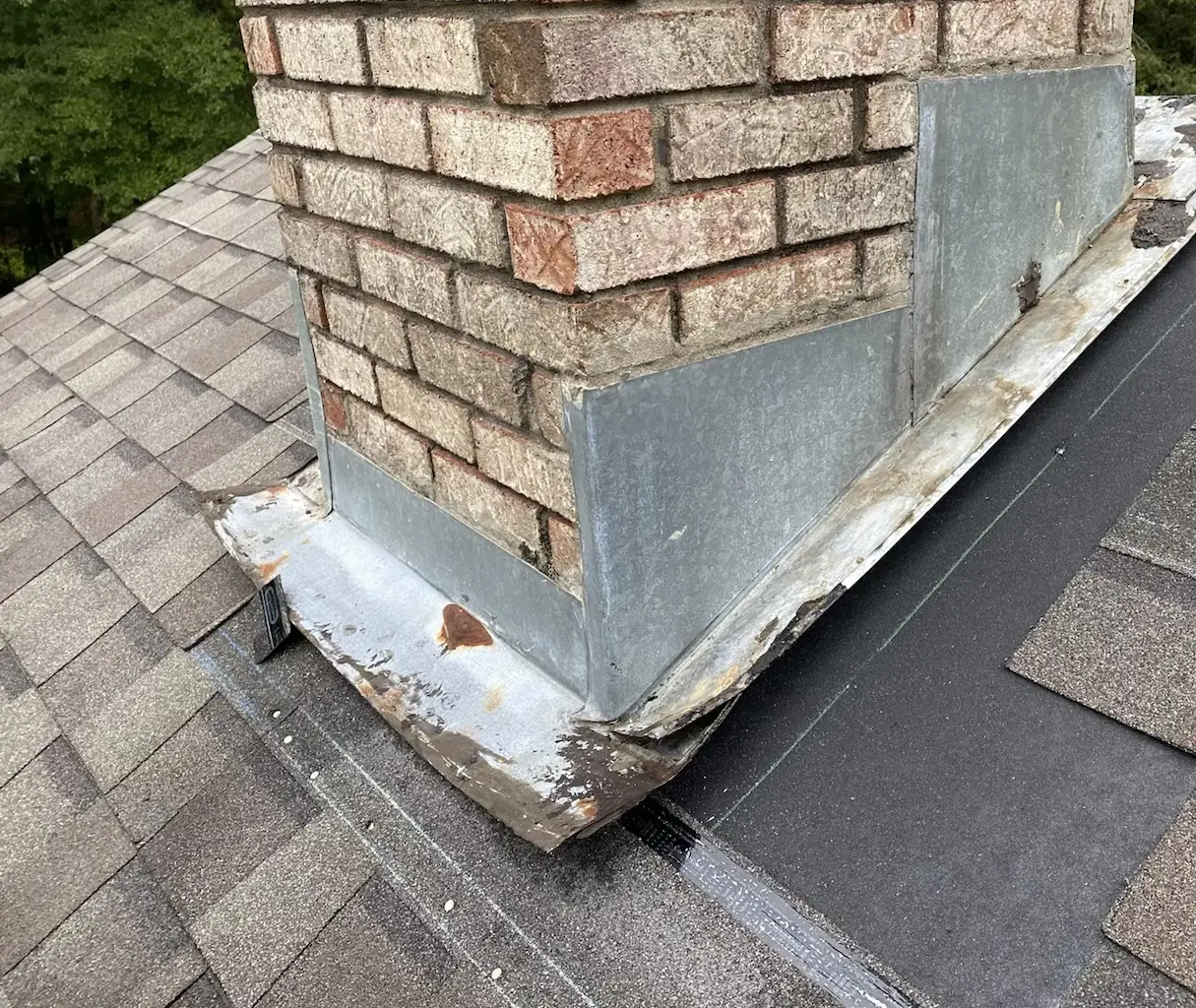
BeforeFailed chimney flashing: corroded galvanized metal, rust staining and smears of old sealant, with the apron edge lifting off the roof.
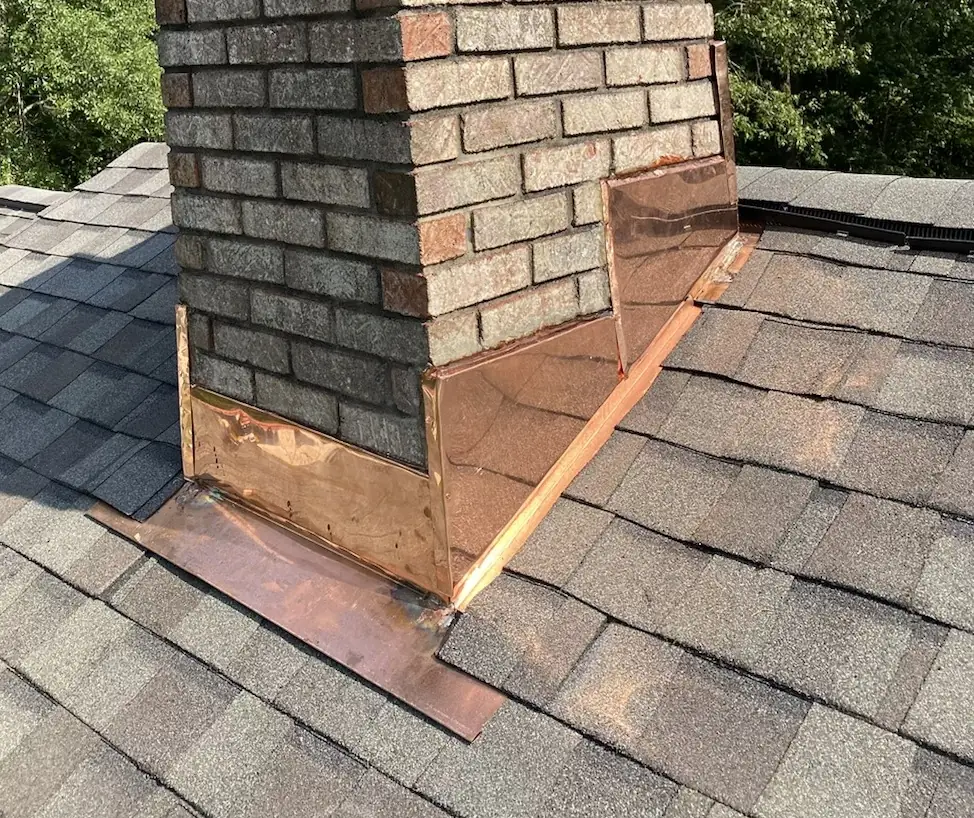
AfterThe same chimney with new custom-made copper flashing and fresh shingles.
Flashing, replaced in custom copper. What came off: corroded galvanized, rust bleeding down the shingles, smears of old tar where somebody had tried to seal their way out of it, and the apron edge lifted clean off the roof. Caulk does not fix a flashing detail; metal does.
The work

What we do on a chimney

FlashingAs needed

Step flashing, counter flashing, crickets, and the cut reglet the counter flashing sits in. Done properly in metal, not caulked over and called done — which is what we find on most of the chimneys we're called out to.

Crown Repair & ReplacementAs needed

The mortar or concrete cap on top of the chimney cracks, and then it funnels water straight down into the masonry. Repaired or rebuilt with a proper overhang and drip edge.

Masonry RepairAs needed

Repointing failed mortar joints and replacing spalled brick, so the chimney stops shedding itself onto your roof.

WaterproofingPreventive

Masonry chimneys absorb water like a sponge. A breathable sealer on the brick and crown keeps it out while still letting the brick dry — and it costs a fraction of rebuilding one that's been soaking for a decade.

Chimney Caps & Sheet MetalBy project

Custom caps, crowns, and chase covers fabricated in copper or galvanized metal to fit the chimney you actually have.

Sided ChasesAs needed

Not every chimney is masonry. On a framed and sided chase — common on newer houses — the failures are rotten siding, trim and corner boards, and a rusted-through chase cover on top. Same job, different material.

Leak DiagnosisFirst

Before any of the above. A lot of what gets called a chimney leak is the flashing, and a lot of what gets called a roof leak is the chimney. We find the source before we quote the repair.
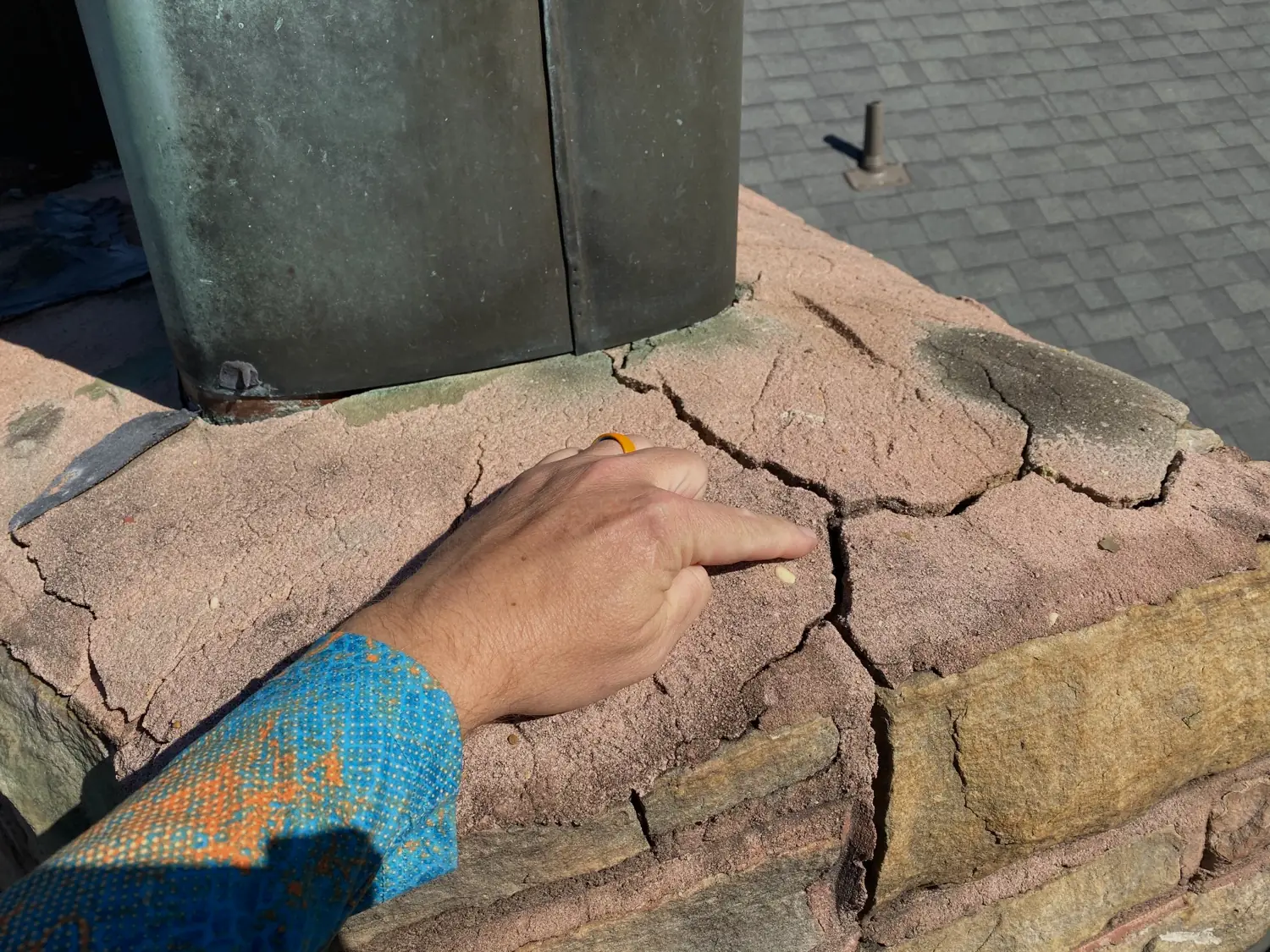
A hand pointing to the cracked mortar crown on top of a stone chimney, with earlier failed patch repairs visible.
A cracked crown. The wash on top has split into pieces, and the grey patches are earlier repairs that failed too. Every one of those gaps funnels water straight down into the chimney.
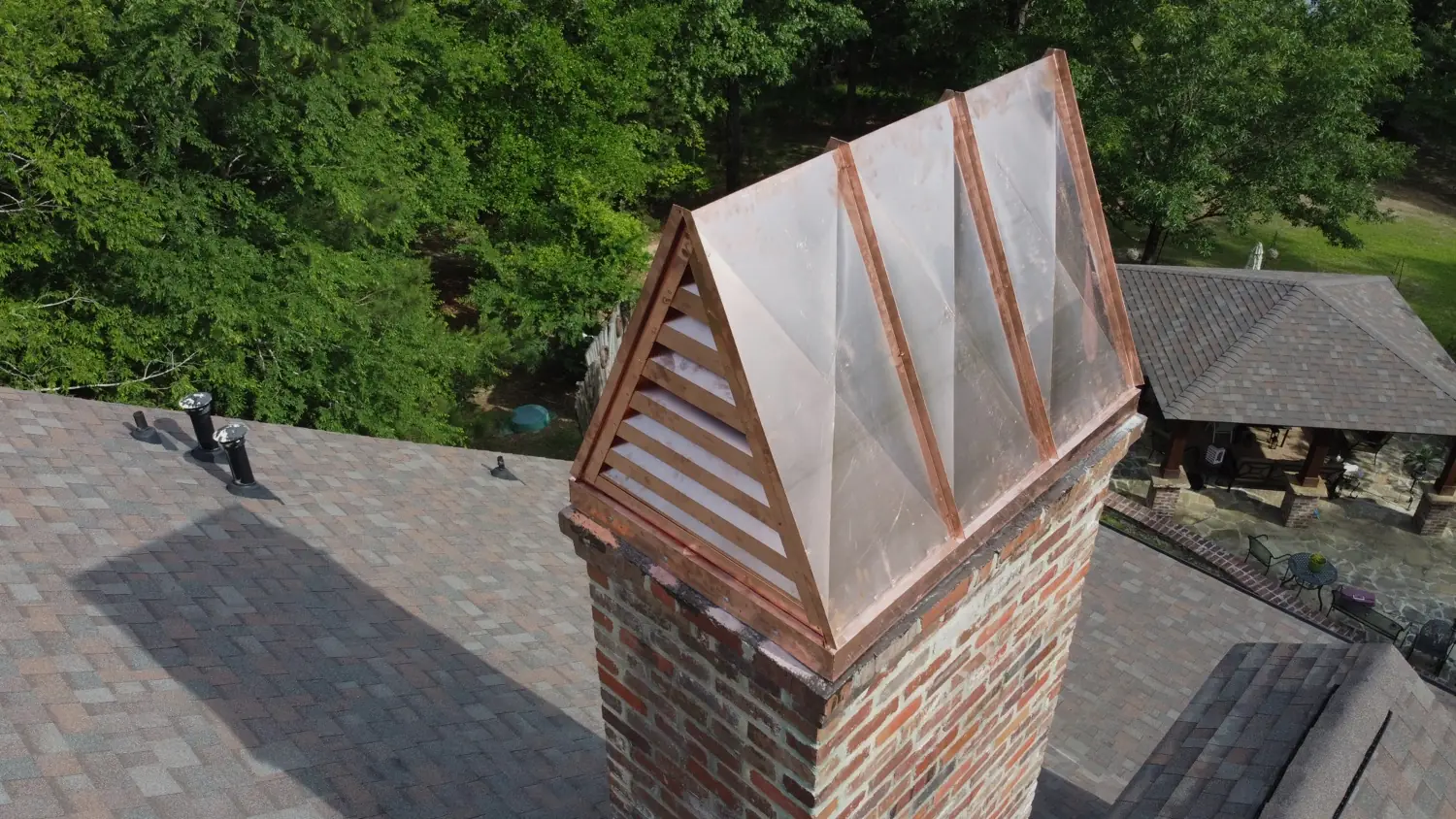
A gabled copper chimney cap with a louvered end on an old brick chimney.
A gabled cap with a louvered end, made to fit an old brick chimney rather than trimmed down from a stock size.
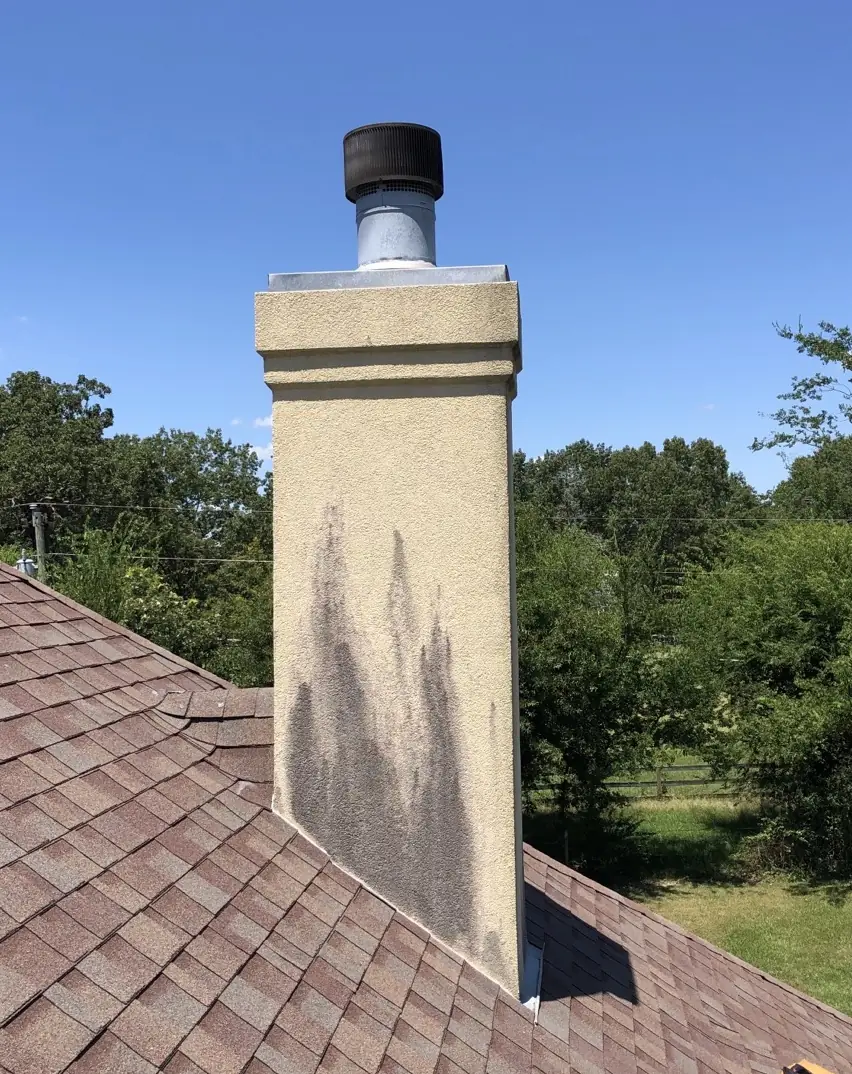
BeforeA stucco chimney with heavy grey staining running down its face.
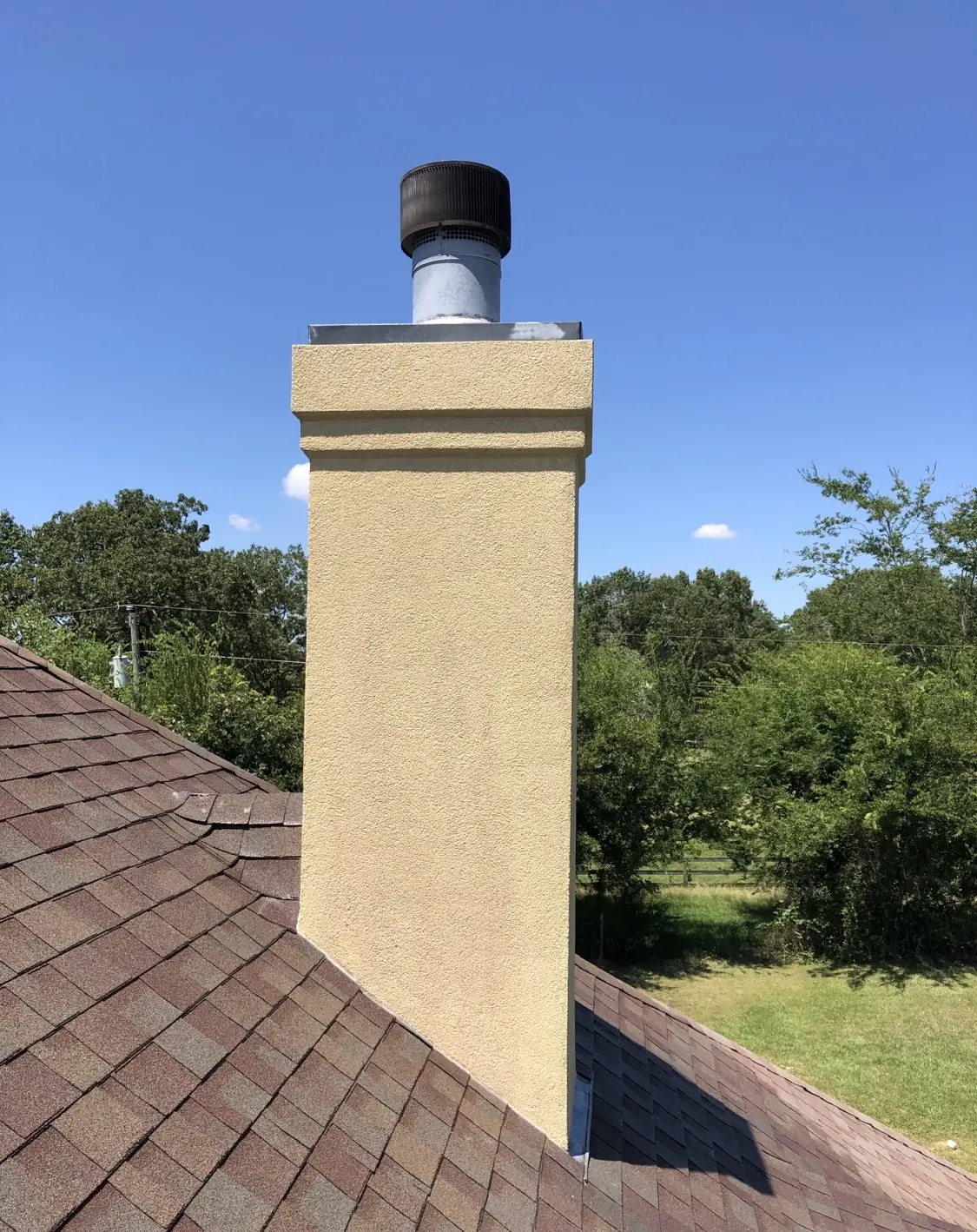
AfterThe same stucco chimney after cleaning, pressure washing and painting.
Cleaned, pressure washed and painted. The stucco wasn't failing, it was filthy — that dark streaking is water running off the chase cover and down the face. Washing and painting cost a fraction of rebuilding.
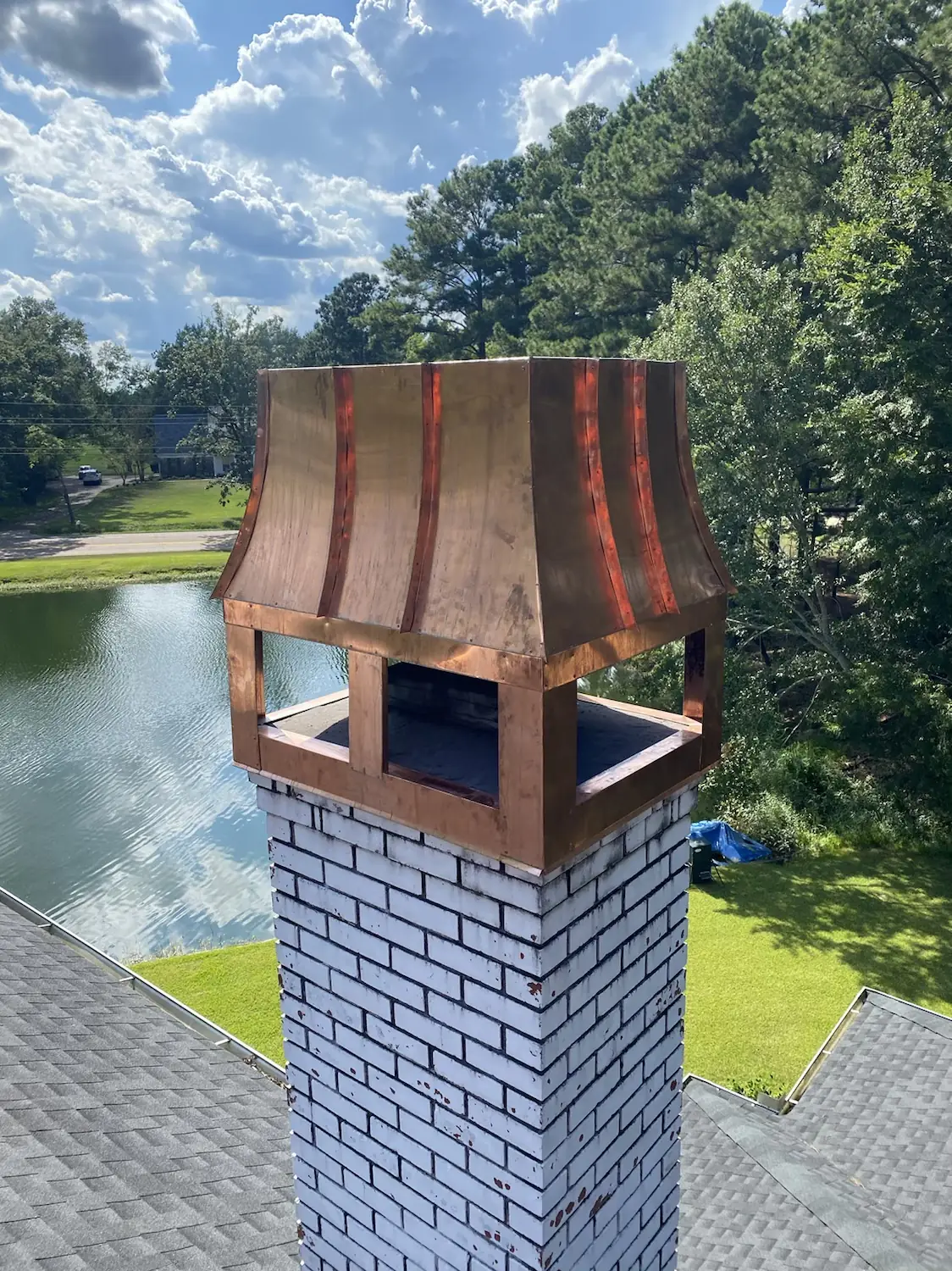
A custom copper chimney cap with a flared, concave profile, overlooking a lake.
A custom copper cap. That flared, concave profile is formed by hand — it isn't a shape you order from a catalogue.
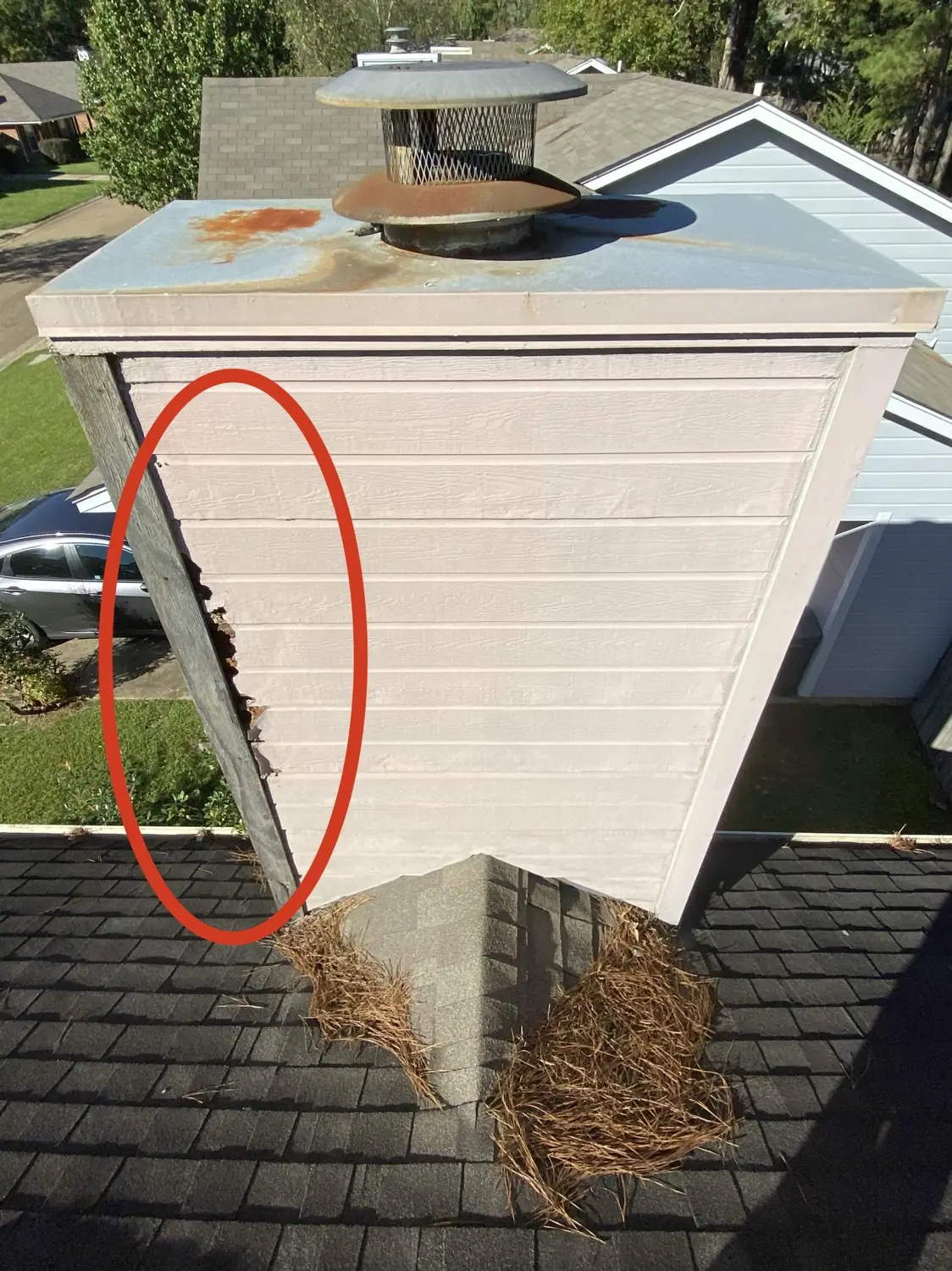
Rotten siding on the back corner of a sided chimney chase, circled, which turned out to be the source of a leak.
The leak was the siding, not the roof. Rotten siding on the back corner of a sided chase, out of sight from the ground. Circled is what was actually letting water in.
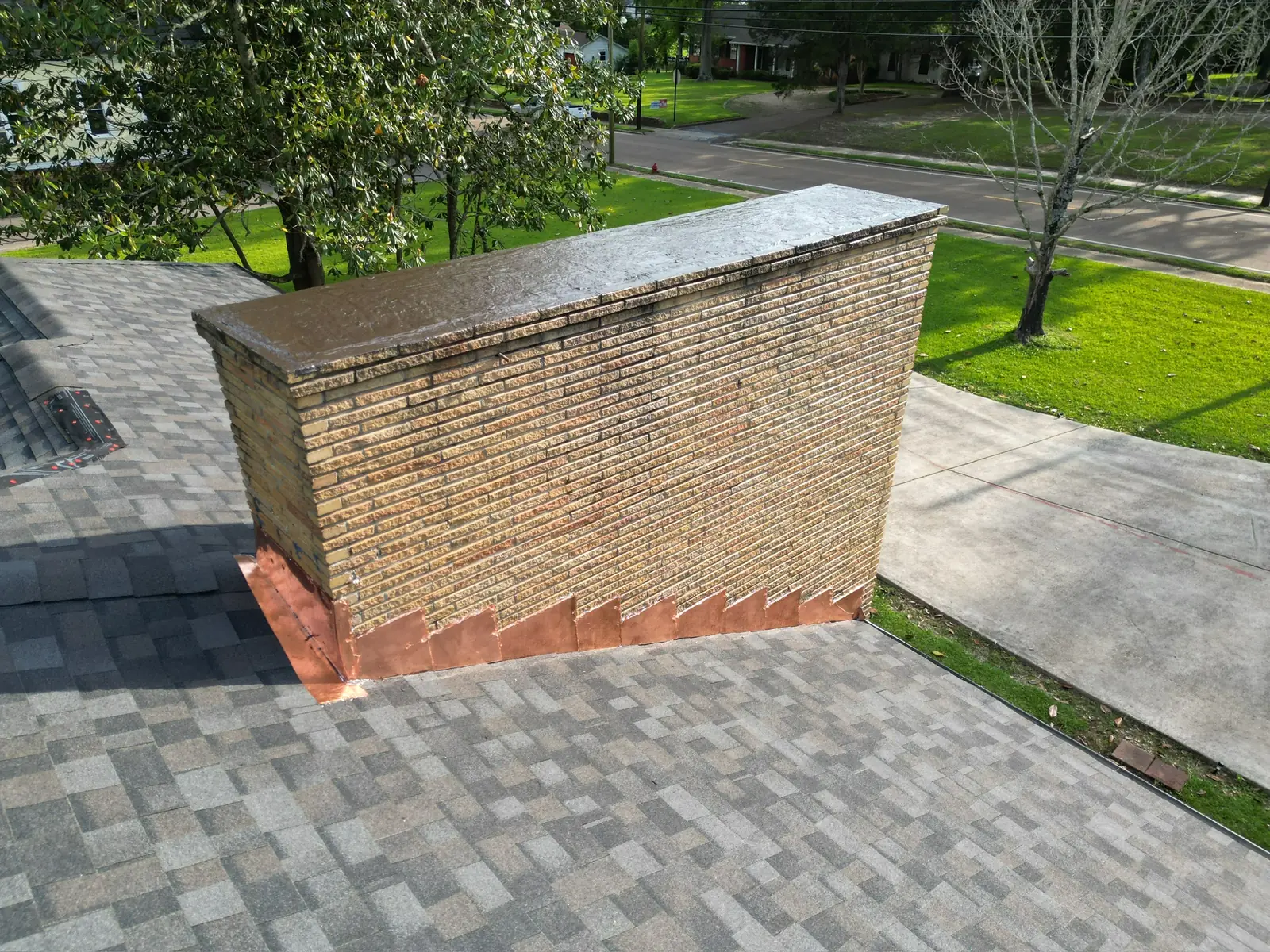
A brick chimney with new copper step flashing at its base and a freshly coated crown on top.
Step flashing and a sealed crown, same visit. New copper stepped up the side course by course, and the wash on top coated over so it stops taking on water. Those two failures usually arrive together, and it costs less to fix them together.
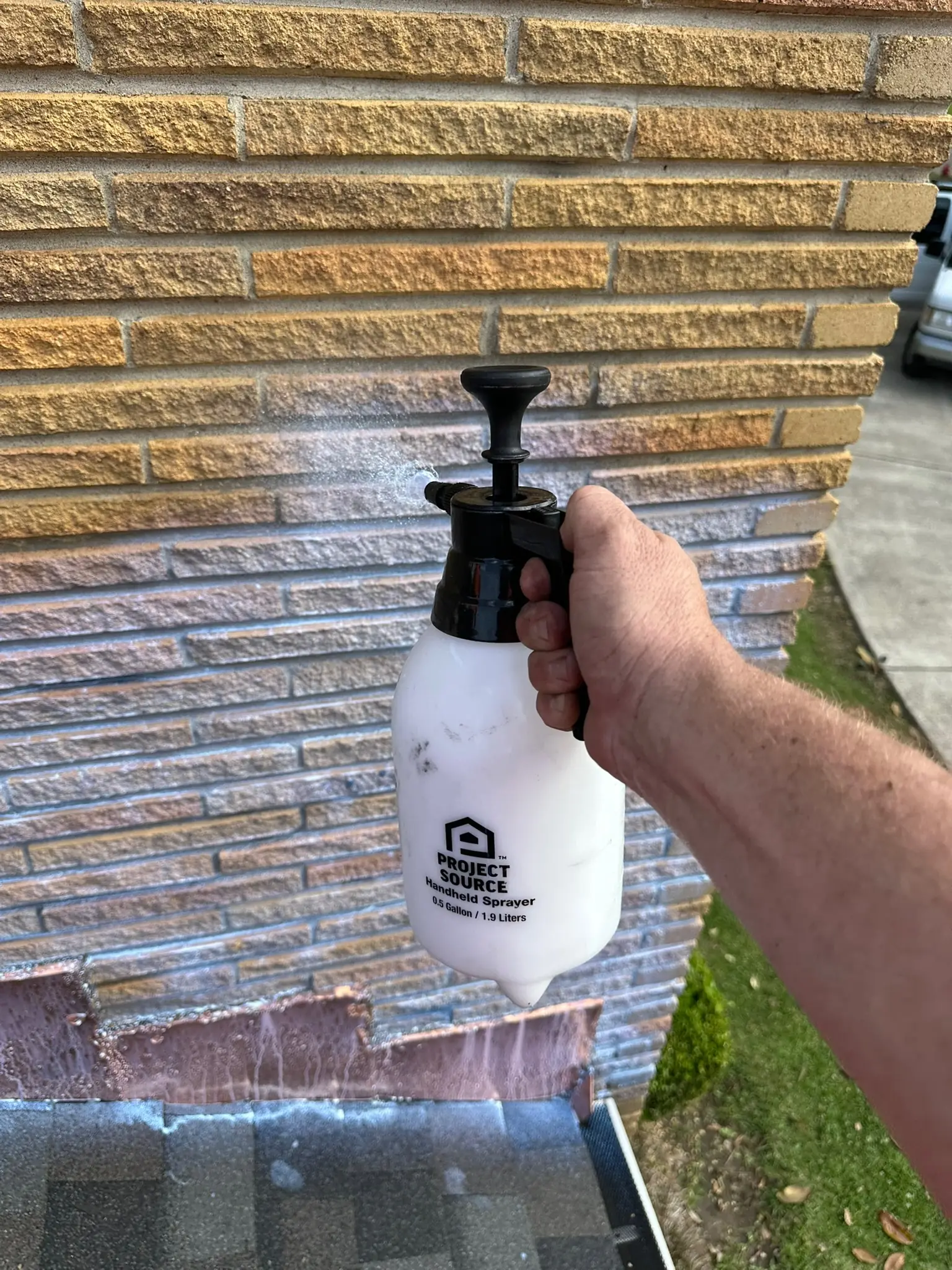
A hand spraying clear water repellent onto the brick face of a chimney.
Water repellent going on the brick. A clear masonry sealer, sprayed on and soaked in rather than filmed over the surface, so the brick still breathes and dries out. It's the cheapest thing on this page and the one that buys the most time.

Seeing a stain near the fireplace?

Send us a photo of the chimney from the ground and of the stain inside. That's usually enough for us to tell you what we think it is before anyone gets on a ladder.